

Paul Embery is one of the most interesting, insightful and original voices to have emerged in British journalism for some time — Douglas Murray
AFTER the past few weeks, observers could be forgiven for assuming Britain had adopted a system of government by TikTok. For it seemed that every public utterance by our new prime minister – from announcements on policy to his favourite Greggs snack – was communicated by short-form video.
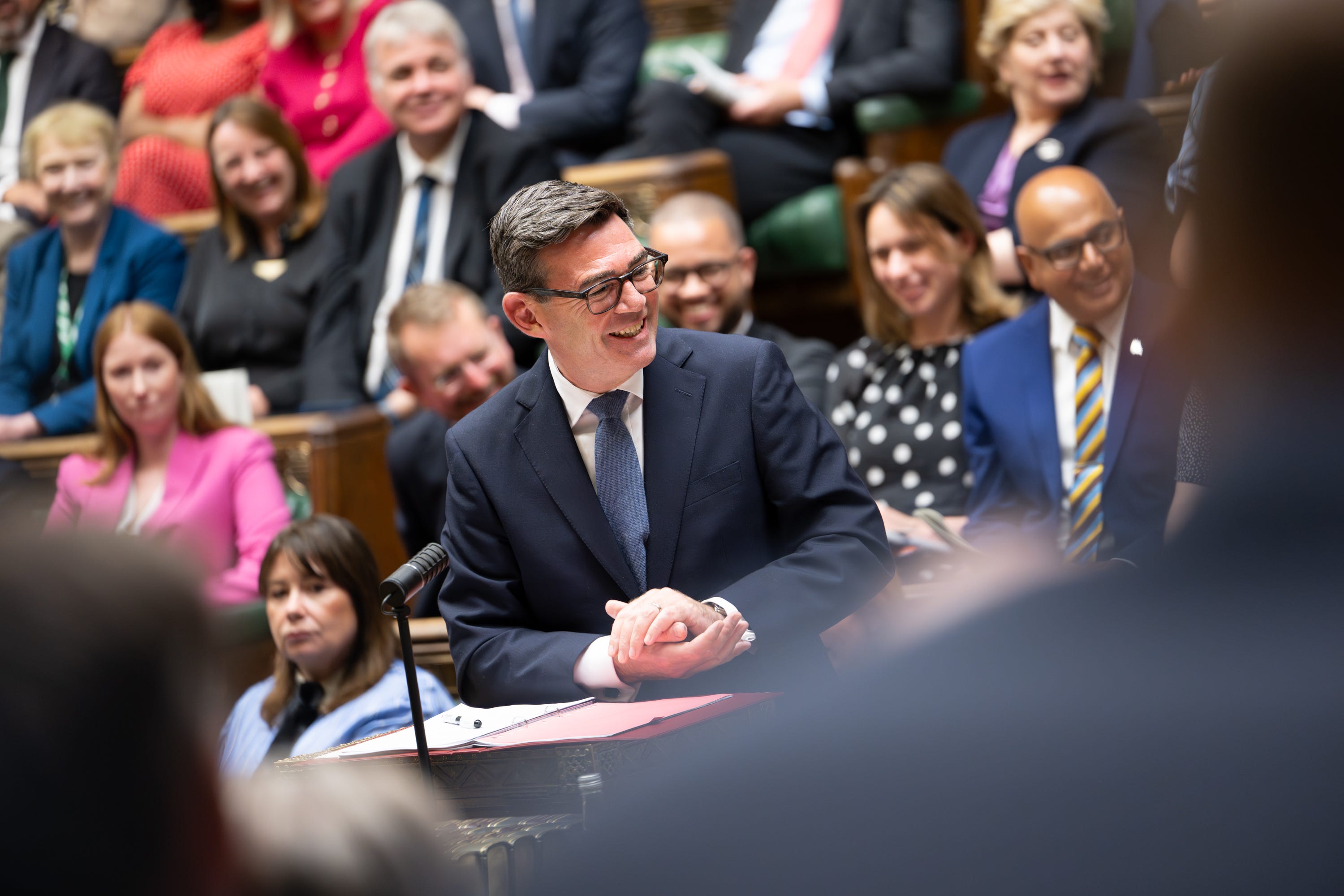
That was until this week. Because, with the parliamentary summer recess now over, normal business has resumed, and Andy Burnham finally found himself in the bear pit of the House of Commons and exposed to the scrutiny of his fellow MPs.
A major statement from the dispatch box on Tuesday was followed by his first prime minister’s questions the following day.
Burnham didn’t exactly set the world alight with his performances, and his delivery was at times Starmer-esque in its clunkiness. But he gave little hint of feeling out of place or overawed. Though that should hardly surprise us. After all, for all his folksy northern charm and anti-SW1 rhetoric, Burnham is every inch the classic Westminster politician, having worked in the orbit of parliament and policymaking since he was 24. And, as a former cabinet minister, statements and questions in the House are meat and drink to him.
Much of what Burnham said in parliament – with the exception of the standard Brexit-bashing – was music to the ears of an old-school socialist like me. He was certainly correct to identify several decades of neoliberalism as a major cause of Britain’s decline. It was this ideology, characterised by a belief in the infallibility of the market and hostility to state intervention, which ultimately led to power and wealth being concentrated in fewer and fewer hands in our country, as well as widespread deindustrialisation, the gutting of local government, a chronic shortage of affordable housing and, as national parliaments became increasingly subservient to global corporations, the slow erosion of our democracy.
Burnham was right, too, to recognise that the sell-off of public utilities – such as rail, water and energy – has proved disastrous. Surely only the most rabid free market ideologue could fail to see it.
But while he may have accurately diagnosed many of the problems, the PM offered precious little in the way of solutions. There were the usual references to his achievements in Manchester, talk of decentralising power from Whitehall, getting young people into work, buses (of course), and liberal deployment of his favourite buzzwords, ‘hope’ and ‘positivity’.
But with the exception of a pledge to follow the standard EU-Nato line on Ukraine, the big geopolitical and macroeconomic narrative was largely missing – meaning that on some of the most vital issues confronting our country, scarcely anyone knows where Burnham stands. Indeed, he may not even know it himself.
And that gaping void will need to be filled swiftly. For no prime minister can, particularly during such tumultuous times, run a country without an overarching strategic plan.
Burnham, it seems, remains locked in the mindset of a city mayor. Many of his policy announcements and media appearances so far have focused on issues – such as cracking down on fake discounts and building homes near railway stations – which, while not unimportant, are highly parochial and usually the sort of stuff that gets left to junior ministers.
He needs to remember that he is now prime minister and first lord of the Treasury, and that means confronting head-on the major touchstone issues that have the most profound effect on voters’ lives and will determine exactly what sort of country we will be a decade from now.
His appearances in the Commons this week represented the perfect opportunity to set out his stall. But after sitting through around four hours of it, I cannot say I am any of the wiser as to what his plan for the future might be. Does he even have one? Where is the crucial big-picture thinking?