

Paul Embery is one of the most interesting, insightful and original voices to have emerged in British journalism for some time — Douglas Murray
SO that’s it. Thursday’s election results were atrocious for Labour and are certain to sound the death knell for Sir Keir Starmer’s leadership. The inevitable hammering has been dished out by British voters and, soon enough, the removal vans will be pulling up to the rear entrance of 10 Downing Street.
Starmer is a dead man walking; there can be no doubt about that. And it will likely be no more than a couple of months before the curtain falls on his premiership. But Labour MPs and activists should banish from their minds any belief that his departure will lead to electoral rehabilitation. Because, oh boy, the party’s problems run far, far deeper than the shortcomings of its current leader.
In fact, in the absence of major shock therapy, the question of who leads the party will prove entirely irrelevant. It would be like the crew deposing the captain of the Titanic as it steamed towards the iceberg only to then fail to take the necessary emergency action.
Look, we all understand that most governments – even competent ones – experience a popularity crash mid-term, and this often manifests itself in heavy defeats in local elections. So it would be easy to dismiss Thursday’s events as standard political fare.
But these results do seem particularly significant, not least because on this occasion the official opposition also received a spanking. That is most unusual. And the big winner happened to be an insurgent party which still has just eight MPs and only came into existence five years ago. In the context of British political norms, that is extraordinary.
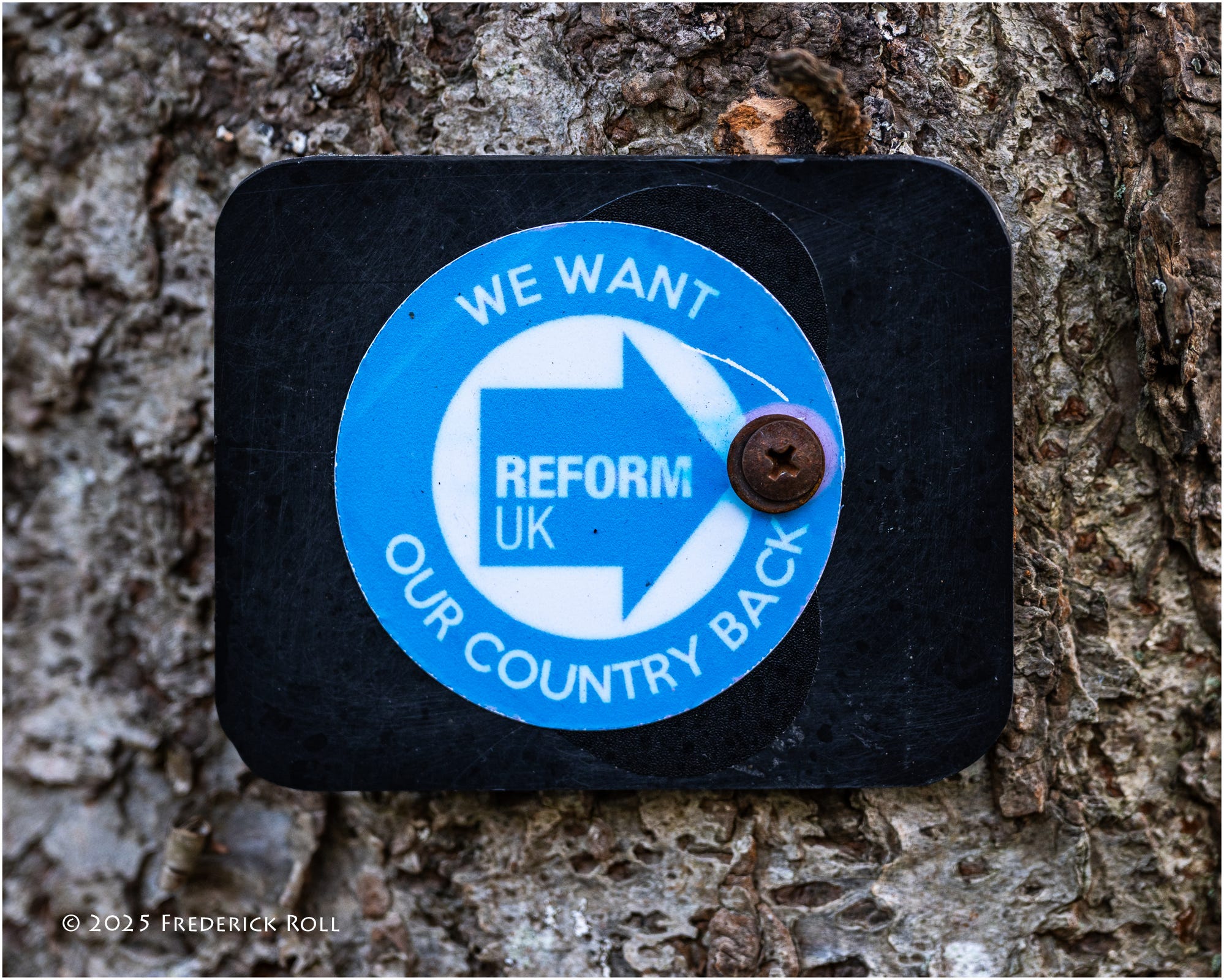
Strikingly, that party, Reform, made tremendous inroads into both Labour and Conservative territory. In Red Wall Wigan, for example, it won 24 of the 25 seats up for grabs, while in Havering it won overall control and obliterated the Tories (who were previously the largest party).
Reform is evidently building its base around what the political writer and commentator David Goodhart has described as the ‘Gavin and Stacey’ alliance: the middle-classes in suburbia and the shires, and the working-classes in our post-industrial, left-behind towns. Brexit-voting Britain, in other words. And the strategy seems to be working.
Meanwhile, though they didn’t win a huge number of seats, the Greens picked up a decent vote share and put in their best ever local election performance.
All of this confirms that British politics is splintering all over the place, and that the old tribal loyalties are breaking down.
This phenomenon will surely only gather pace in the months and years ahead, particularly as the government and country face a very profound - and almost unprecedented – set of challenges. For not only is the country in a deeply parlous state – with the economy cooked, public services crumbling, the welfare system in a shambles and social disintegration breaking out in our communities – but nobody within government seems to have the foggiest idea of how to turn things around.
Instead of displaying the boldness and radicalism required to set the country on a new path, ministers simply tinker at the edges of the existing discredit system. So, on the economy, they raise a tax here and redirect a bit of money there while stubbornly refusing to use the government’s massive fiscal capacity to reinvigorate our productive sector and drive growth.
The great economist John Maynard Keynes, once a guiding light for centre-left governments the world over, famously – and correctly – said, ‘Anything we can actually do, we can afford.’ Rachel Reeves rejects all that. Couldn’t possibly relax those ‘ironclad’ fiscal rules and risk upsetting the markets, you see. Even if such a course serves to plunge the country into recession, as it will almost certainly do.
We no longer make things in Britain. We don’t build houses. We don’t value vocation or skilled labour. We don’t maintain our roads. We have no energy security. We don’t catch and punish criminals. We can’t control our borders. We make people wait weeks for a GP appointment. The list of problems is endless.
Labour isn’t solely to blame for all these failings, of course. Most have been many years in the making. But the party did promise to start putting things right in short order. And, in many cases, it has fallen well short. Hence its poll ratings are scraping along the floor. For too many Britons, there is little tangible change from the final years of the last Tory government.
That is precisely why we are now into multi-party politics across Britain. The old establishment parties have shown themselves utterly incapable of breaking with orthodoxy and forging a brighter future. What they broke, they are not trusted to fix.
On social media a few days ago, a woman wrote of her despair that her son, having completed a law degree at a good university, applied for 150 jobs or internships, but secured nothing. This is the future our kids are facing – a desperate and often fruitless struggle to land a job and home, and become a valuable and productive member of society. And in many cases saddled with huge debt before they even get going. The expectation that life will be better and easier for our children than it was for us seems like a sick joke.
So Labour can and will change its leader. And, in time, the Tories may feel tempted to do the same with Kemi Badenoch. But these changes alone won’t change the fortunes of those parties. Different faces pulling precisely the same defective levers is not what the electorate wants or country needs. We need instead complete honesty about the extent of our nation’s predicament and a credible programme for recovery.
The British public have had enough of the status quo. They want a fundamentally different society. If that wasn’t clear before Thursday, it is now.
A reminder that you can follow me on ‘X’: @PaulEmbery
An edited version of the above piece first appeared on the GB News website.
In my option, Reform have done well as they tap into Thatchers’ human desire to make a better life for yourself and your family and Blue Labours no nonsense trade union aspiration of working class solidarity. New Labour is dead, encapsulated by the Peter Mandleson fiasco. They also say they will “stop the boats” and you sort of believe they will actually do it. No government can ever call itself legitimate if it cannot protect its borders and its people.
Whilst it’s right that there is no one in the Labour Party who can save the Labour Govt, it must also be right that Starmer should not be afforded any protection from his removal. Just as the Tories tried, but failed, to scramble to provide a true leader, so must Labour do the same. Nothing can save them, but keeping Starmer in post is not the answer. This govt failed us from the get go, and now we have to watch our country sink into the abyss while Labour pretends they are the answer, rather than the cause.