

You probably won't agree with all of Mr Embery's policy prescriptions, but he will force you to think outside your usual political grooves — Wall Street Journal
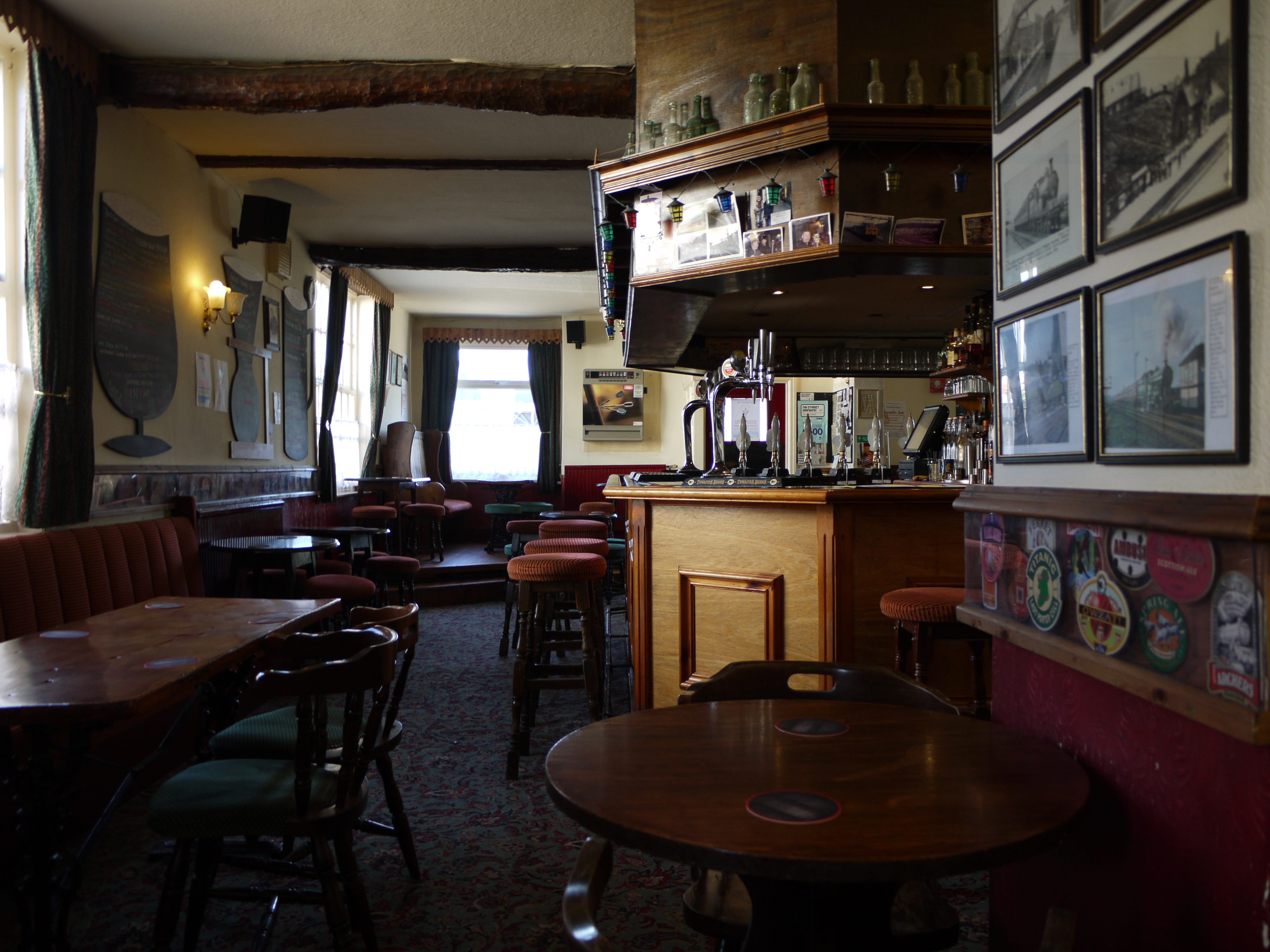
I SNEAKED INTO one of my favourite watering holes in the fine city of Norwich a few weeks ago. I have been drinking there on and off for around 30 years, having been introduced to it by a relative who had moved to the area.
It’s a cracking pub, often bustling, and the recipient of multiple gongs (including the Campaign for Real Ale’s prestigious ‘national pub of the year’ award).
This particular visit occurred early evening on a Saturday. Sure enough, the place was rammed, with every stool, seat and table occupied, and thankfully with no strains from a juke box or clacking of pool balls to drown out the conversation flowing between punters. It’s a proper pub, you see.
But as I was quaffing a pint of Oakham Citra and soaking up the atmosphere, I noticed that the place was beginning to thin out. It couldn’t have been later than about 7.30pm. Yet over the next half an hour or so, a good number of customers left, and hardly any fresh ones came through the doors.
By the time I departed, a short while later, the pub was half empty and much of the atmosphere and hubbub had dissipated. (One wisecracker later suggested to me that the Green-voting urban liberals of this trendy university city saw me, a Blue Labour foot soldier and GB News pundit, walk through the door and decided to drain their glasses and scarper – but I like to think that wasn’t true.)
I had witnessed this phenomenon – pubs that, once upon a time, were busy long into the evening now emptying out well before closing time – quite a bit in the past three or four years, but had not paid too much attention to it.
This latest experience, however, jolted me. If it was now happening here at one of the most popular taverns in the country, and one which, as I knew from personal experience, was once regularly well-filled until near closing time, particularly on a Saturday, perhaps we were looking at a definite cultural shift.
I was quite used as a young man to being in pubs when the bell for last orders sounded, often precipitating a rush to the bar. I suspect that there are very few establishments where that sort of thing still happens. Do pubs even have these bells behind the bar today? I cannot remember the last time I heard one rung.
I don’t claim to be certain of the reasons for why pubs are clearing out much earlier than was once the case, and I’m unaware of any specific research into it. Some will doubtless argue that pub prices are so prohibitive that customers are simply driven away – or at least forced to wend their way home sooner. And with supermarkets selling alcohol so cheaply in comparison, many drinkers will choose more regularly to have a tipple at home.
But I suspect it’s something more than these things. In my view, the whole covid saga fundamentally altered the nature of our society, and in particular our relations with each other and the balance between our home, working and social lives. During the long periods of lockdown, we became accustomed as a society to staying at home.
We worked out with Joe Wicks on YouTube and stopped going to the gym. Men built ‘man caves’, usually including a mini bar, at the end of their gardens and no longer felt the need to go out for a beer. We held quiz nights with family and friends on Zoom and participated in work meetings in the same way. Many never went back to the office in any meaningful sense. We upgraded our home entertainment systems – because we spent so long staring at our TVs and devices – and no longer looked upon a night at the cinema as a treat. If we did choose to venture outside for the purposes of socialising, we were subjected – including in pubs – to absurd and dehumanising social distancing rules. So many of us just didn’t bother.
We got into the groove of spending our days and evenings in the comfort of our own homes – and millions have stayed there. So while a couple of hours down the pub in the afternoon might still be a welcome event, the thought, for many, of having a proper ‘session’ well into the evening and right up to closing time, with a bunch of other people, seems odd, almost unnatural or decadent.
Perhaps this new way of living had started to take hold before covid struck. Certainly the bonds of association and the sense of community that was once a feature of most of our lives have been slowly eroding for years. But the pandemic, and the concomitant heavy restrictions placed on the population by the authorities, unquestionably accelerated the shift. And, in a spiritual sense, we are much the poorer for it.
Pubs were one of those common spaces that acted as a social gel, bringing together friends and strangers, sustaining old relationships and helping to forge new ones. Likewise with local shopping parades, working men’s clubs, nightclubs (a staggering 36% of which have closed since the pandemic), churches, communal workplaces, youth clubs, libraries – all of them social hubs that bound us together; now withering on the vine as we retreat more and more to the comfort of our living rooms, home offices and smartphone screens.
It is surely undeniable that the decline of such places, and the consequent narrowing of our social networks, is contributing in no small way to the disintegration and atomisation gripping our society. Against this backdrop, it’s a minor miracle that couples are still able to meet and form relationships at all. Little wonder that our birth rate is falling off a cliff.
We desperately need to revitalise our civic society and breathe new life into those spaces and institutions that were once the seedbed of social interaction and human flourishing.
But is such a thing achievable at this stage of our malaise? Well, isn’t that just the sort of burning question that one might ponder while supping a pint or three in the snug at the local with a few friends.
In fact, I think I’ll do precisely that. Though I’ll be sure not to arrive after 7.30pm. Otherwise I’ll be talking to myself.
A reminder that you can follow me on ‘X’: @PaulEmbery
Hi Paul, you tell the story of so many venues, I am a founder member of a community cinema that has been running now for 30 years. Pre COVID we were seeing audiences of 160k a year, school holidays we were packed out, weekends were our busiest time. Now we are only reaching audiences of 80k we have lost 50% of our patrons. As you say, people are streaming, they don’t want to interact with their fellow man anymore they prefer to sit in their living rooms with a crate of beer and a bag of crisps. COVID and lockdowns were the death of hospitality. Great article Paul, it’s very sad indeed and unfortunately it’s happening everywhere.
As a retired Bar/Restaurant owner I think you could add another suspect. There was a day when friends, fellow workers, tradesmen and others at the end of a day would by habit end up in their local before going home. They would say hello or give a nod to all their fellow regulars. What social media has done is make everyone so up tight so that relaxed humorous social friendly conversion has gone because everybody has so much information in their heads on which of course they develop a view. Differences of opinion become louder, blood pressure rises and the joy of the days of having a few relaxing quiet pints with the boys becomes a memory. The Pub atmosphere is no longer inviting.