

You probably won't agree with all of Mr Embery's policy prescriptions, but he will force you to think outside your usual political grooves — Wall Street Journal
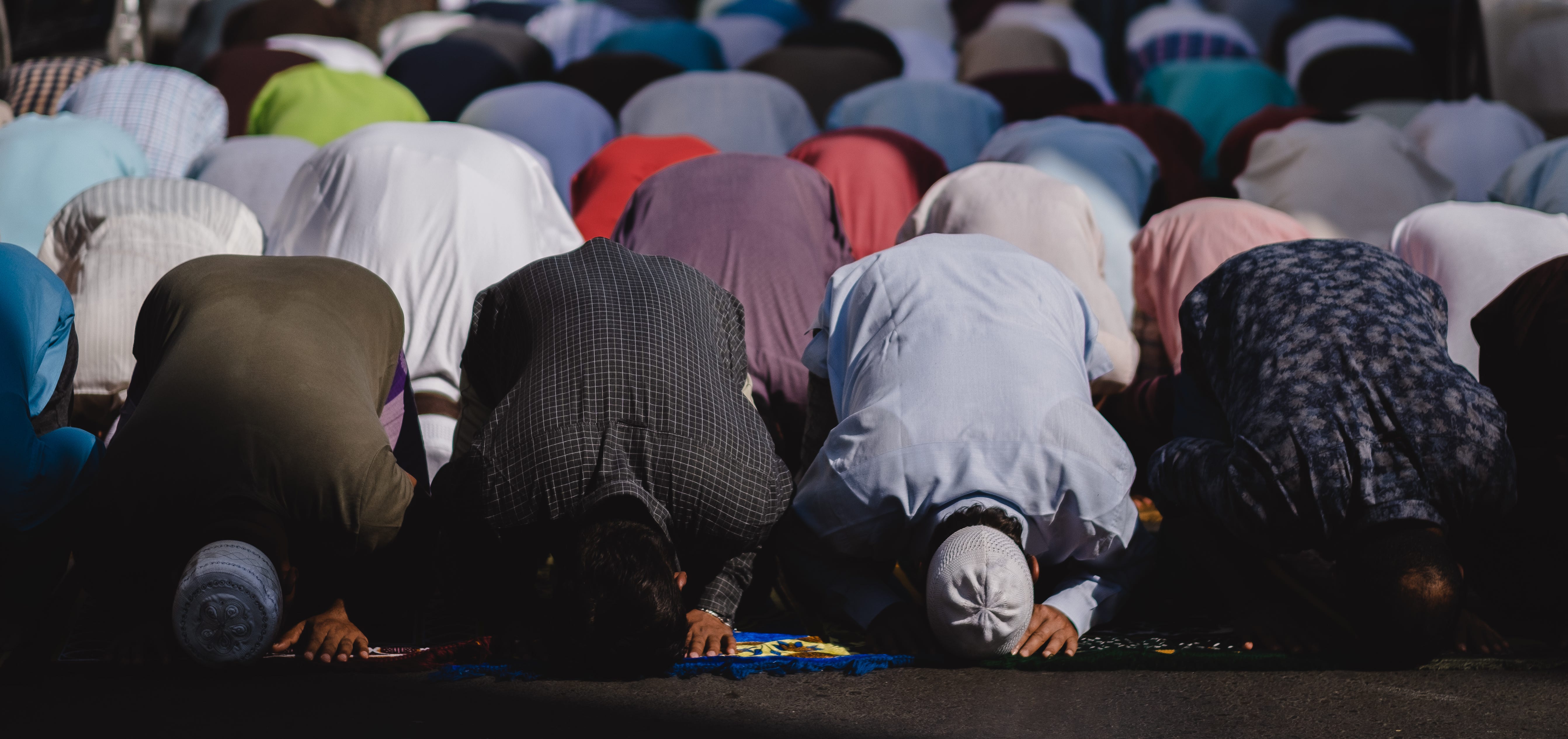
I WOULD NOT wish to live in a country that did not permit genuine freedom of religion. The regimes in such places tend not to be very pleasant, and it can be certain that where citizens are not allowed to follow the faith of their choosing, other fundamental liberties will also be curtailed.
A nation, if it is to be regarded as civilised, must surely grant licence, within the wider law, to religious believers to participate freely in all the rituals associated with their particular belief system.
Polling data shows this to be the majority view among Britons – a welcome state of affairs which serves to demonstrate the tolerant and accepting character of our country (while refuting the canard, repeatedly tossed out by various liberal catastrophisers, that we live in some hate-filled cesspit).
So when the shadow justice secretary, Nick Timothy, expressed his disapproval of the spectacle of a large number of Muslims taking part in an organised mass prayer at an ‘open iftar’ in London’s Trafalgar Square recently, arguing that it amounted to an ‘act of domination’, one might have assumed that his comments would be roundly denounced.
Certainly several of his political opponents inveighed against him, and in some cases called for his sacking. But the condemnation wasn’t universal. In fact, a number of voices across politics, the commentariat and social media came to Timothy’s defence, arguing that he had started a legitimate debate about the permissibility of mass ritual prayer in public spaces, and that they, too, had been uneasy at the Trafalgar Square scenes.
The mixed response stands in stark contrast to the zeitgeist just a few years ago, when such remarks by a prominent politician would almost certainly have sounded the death knell for both his career and reputation, and is illustrative not only of the extent to which the political weather in these islands has changed, but also how the broad consensus that existed in the SW1 bubble on issues such as immigration, integration and diversity is splintering.
I strongly suspect that Timothy’s remarks will have struck a chord with large numbers of people across the country, including many who would generally see themselves as upholders of religious tolerance. Why might that be so? Why would anyone who purports to support freedom of religion bridle at the spectacle of a mass public prayer by Muslims?
I think there are some fairly straightforward answers to these questions. Britain remains, officially at least, a Christian country. England has an established church; Scotland a national one (though some contend that this, too, is established). Census data shows that Christians represent, by some margin, the largest group among those who profess a religious belief.
Millions are, of course, irreligious. But many of these will – like that standard bearer of atheists, Professor Richard Dawkins – consider themselves Christians in a cultural sense. So they celebrate the faith’s major festivals; they enjoy singing and listening to hymns; they feel moved when entering an ancient church or cathedral; and they understand that Christianity is deeply intertwined with our history as a nation, moulding the character of our society over a thousand years and shaping our laws, customs, language, politics, architecture and music.
These people are, I think, inclined to believe that Christianity has, by and large, been a force for good inside their country. They feel, even as non-believers, an affinity with it; and they are reluctant to see its total erasure from our national life or its supplantation by some other faith.
Taken together, actual Christians and cultural Christians make up a clear majority throughout the country, suggesting that, for all its diminishing influence, there is life in the old faith yet.
Despite this, however, it is undeniable that the phenomenon of mass immigration, coupled with the obsession of our political and cultural elites and national institutions with championing multiculturalism at every opportunity, has meant that the complexion of Britain is changing fast, precipitating the gradual replacement of a dominant overarching culture – of which Christianity was a key component – with, well, everything and nothing.
And the multiculturalism promoted by the elites is, in any case, not genuine multiculturalism. Rather, it is asymmetric multiculturalism, a construct which sees minority cultures enthusiastically celebrated, while the majority culture is consistently downplayed (and often denigrated).
This has led many among the majority culture to feel that their identity is being, if not erased, then slowly eroded, and that, as a consequence, they are losing their status in society. For this reason, a resentment has been building among them, coupled with a belief that Britain is approaching some sort of inflection point – a pivotal moment throwing up a choice between holding on to the country we are, and have long been, or turning into something new and unrecognisable.
They perceive, too, that their tolerance and goodwill have been taken for granted. Many of the changes foisted upon their communities and country were effected without their consent – and often in the face of their opposition. Time and again they expressed their feelings at the ballot box; time and again they were ignored.
Globalisation, even when it meant deindustrialisation and rapid demographic transformation, was good for them, they were told. Economically and spiritually enriching. Embrace it or be condemned as a ‘Little Englander’ or xenophobe.
A populace that was broadly agreeable to properly-regulated immigration and a modest degree of cultural diffusion had these things forced upon them in turbo-charged form. And guess what? They didn’t much like it. What they would have accepted in moderation, they rejected when it came at them uncurbed. For many, the upheaval caused through the rush to a new globalised economy had changed their lives, communities and country too fundamentally for them to just go on sucking it up.
It is this sentiment that, I am quite sure, explains why some members of the majority culture may have, like Nick Timothy, been uncomfortable with the spectacle of the mass iftar in London. It isn’t that they are racists or bigots. Neither is it that they believe Muslims should not be entitled to pray to their God. Rather, it is that the event – held inside an iconic square and under the watchful eye of a British military hero – served as a very public exemplification of the unwelcome transformational shift that has taken place inside their country.
Would these citizens have felt the same way if it had been Jews, Sikhs or Hindus at prayer? In most cases, probably not. Or at least any disquiet would have been less marked. But even that isn’t necessarily a sign of an irrational or hateful disposition towards Muslims. For it cannot be denied that, of all the non-Christian religions which have played a role in reshaping the cultural contours of our country in recent years, Islam – the most confident and assertive of them – has been the major contributor.
It is beyond question, too, that Islam, more than other religions, contains the kind of militant and radical strains – some of them highly-organised and vocal – that do not sit easily with Britain’s traditions of democracy and pluralism, and that there exist within it elements who see unbelievers – ‘infidels’ – as something less than human.
Such attitudes have manifested themselves in ways that have jarred – and sometimes horrified – the sensibilities of non-Muslims. The rape gangs scandal, the hounding of the Batley schoolteacher, the persecution of Sir Salman Rushdie, the barbarous terror attacks, the censorship of art and literature, the de facto blasphemy laws, the spectacle of a Wakefield mother prostrating herself before a group of angry Muslim men because her son had accidentally scuffed a copy of the Koran: it is simply unreasonable to expect people, even if they understand that not every Muslim is culpable, to avoid drawing a direct line between these things and Islam. Or to believe that Islam presents no greater a threat to the social fabric of the nation than does Judaism, Sikhism or Hinduism.
So we should be slow to condemn those who feel a certain unease when they hear of mass Islamic ritual prayer events in public places. Or when Premier League football matches are paused to allow Muslim players to break their fast. Or when Ramadan lights are officially displayed along the capital city’s main thoroughfares (including, on at least one occasion, over the Easter weekend). Or when Sharia councils are given licence to operate. Or when – as appears to be the case at the time of writing – the king declines to issue a special message for Easter despite doing so for Ramadan just a few weeks previously.
In isolation, some of these things may seem inconsequential and barely worth troubling over. And those who do trouble over them, even in the most temperate way, will know that they are inviting the scorn of high-minded progressives everywhere. But small, incremental changes can slowly – and sometimes not so slowly – coagulate and create fundamental shifts. As the Catholic writer Niall Gooch puts it: ‘Countries don’t lose their coherence and distinctiveness in one fell swoop, by one single and obvious blow; but instead thanks to a constant acid erosion of all that makes them unique and self-confident.’
It’s all very well demanding that dissenters anxious about such changes ‘live and let live’ or show unlimited tolerance. But when the shift is in a direction that they do not wish to travel, such strictures are idle.
So is there a route through all this? Is there a way to arrest the decline of social solidarity and rise of communal sectarianism that we are witnessing in our communities? Is it too late to prevent the divisions that are playing out around us from widening?
Certainly there are no easy answers. But, as a start, we must recognise that multiculturalism – by which I mean hard multiculturalism; the state-sponsored variety that actively promotes separateness and difference for their own sake – has failed.
Instead of creating a country in which citizens from different cultures live in happy coexistence and in a spirit of peace, harmony and mutual respect, it has given us instead a land, if not of strangers, then of growing estrangement, a place where different identity groups go about their business quite often insulated from each other. Perhaps the effects of this are less deleterious in the gentrified districts of London or other fashionable cities where well-heeled liberal utopians – including a large number of our political and media classes – live their lives. Doubtless the wide variety of trendy restaurants serving exotic foreign cuisine and the availability of cheap au pairs help to persuade such people that multiculturalism really is a thing worth celebrating. But in the Bradfords and Birminghams and Barkings (and here I speak from personal experience) it is a different beast entirely. For it is in such places – the grittier, hard-pressed towns and cities of our country – that multiculturalism has really been put to the test. And it hasn’t fared well.
So it seems to me that we face a stark choice. Either we continue along the current path, whereby our leaders persist in imploring us all to go on celebrating the fact that we are so different from each other and pretending that ‘diversity is our strength’, or we try to confidently reassert an overarching majority culture – the same one as fortified our country through many generations until a couple of decades or so ago.
The first option would, I fear, lead to the slow Lebanonisation of Britain, a process which would see our country become ever more divided along religious, ethnic and cultural lines, with a myriad of disparate identity groups retreating to their own tribes and living parallel existences from each other, such that, sooner or later, the divisions become formally reflected in political and institutional governance.
The second option must therefore be the preference. But it would take political courage. It would mean adopting a Japanese-style approach, whereby the longstanding national culture is unapologetically promoted above all others and public leaders and institutions do not obsess about championing cultural diversity as a good in itself. It is no coincidence that Japan can boast levels of civility, order and cohesion far in excess of most countries. Shared identity, common cultural bonds and universal moral codes are essential in engendering that kind of high-trust society. They are also critical in ensuring sustained public support for such concepts as wealth redistribution and the welfare state.
That isn’t to say that minority rights shouldn’t exist or that minorities shouldn’t be free to make their own cultural choices, including following their desired religion and exercising their right to freedom of expression and assembly. In other words, soft multiculturalism, the type that recognises and is willing to permit individual choice in such matters.
But when it comes to public policy, including decisions over the use of public resources or spaces, we should reject the view that all cultures are equal and therefore entitled to identical provisions. Instead, we should unashamedly place the national majority culture above all others.
So, on matters of faith, for example, only the religion of the established or national churches – Christianity – should be promoted by public bodies and institutions. By all means, hold your iftars in your mosques and homes; you should have every right to do so. But don’t expect the police or local authority to grant you a licence to do it as part of some officially-recognised event, and where it is likely to create a major spectacle or disrupt the lives of others. (It should be noted, incidentally, that the Trafalgar Square iftar was held in the shadow of St Martin-in-the Field, one of the nation’s most iconic churches. I do wonder what the reaction might have been if a large number of Christians had conducted a mass prayer session outside the central mosque in Bradford.)
Plainly any attempt to reassert an overarching majority culture would be less effective if immigration were allowed to continue at the pace and scale of recent years. So a sharp reduction in numbers must be a priority. One could not seriously claim to wish to halt the deepening fragmentation of our society without also accepting that net migration figures must in the future be more modest and manageable.
Liberal sophisticates will, of course, recoil in horror at all this, just as they went into meltdown over Nick Timothy’s remarks. C’est la vie. Their beliefs, implemented with such enthusiasm over so many years, have brought us to where we are. They need to accept that the status quo has failed and will go on failing.
It is, in the end, possible to remain – or, should I say, return to being – a decent, civilised and harmonious society without genuflecting at every opportunity to every minority culture or believing that they are all worthy of the same treatment as the one that has been dominant in these islands for far longer than any of us can remember. The greater the level of cultural diversity, and the more we adopt a hodgepodge approach to these matters, the lower the levels of trust and solidarity in our communities. That is a truth that, sooner or later, we are all going to have to recognise.
Happy Easter.
A reminder that you can follow me on ‘X’: @PaulEmbery
The best article I have read on this issue and one that I believe has the most accurate insight on how the majority of British people feel.
I once studied Sir Keith Joseph’s..’Socialist ratchet critique ‘
He argued that piecemeal changes on their own may seem fairly innocuous, however each time the ratchet locks towards its desired destination that change is hard to reverse and eventually we end up with a country that is not recognisable.
His critique centred on the nightmare politics of the 1970’s of both the Heath and Wilson governments.
I believe that we are living with an Islamic ratchet process.If we do not change our culture may be seriously undermined